
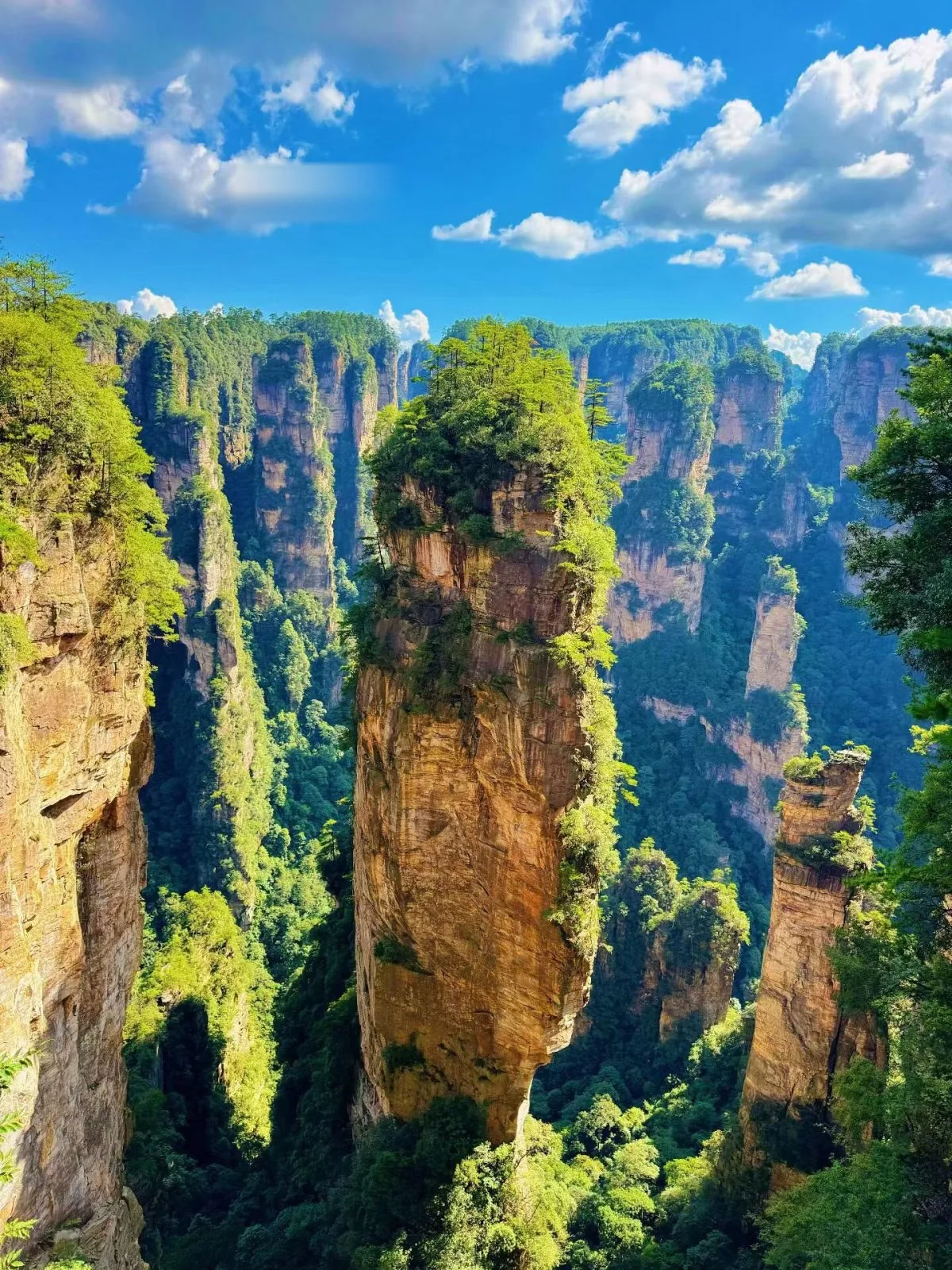
The two ways to get to Zhangjiajie are to fly into Zhangjiajie Hehua International Airport (DYG) or to take a high-speed train to Zhangjiajie West Railway Station — the airport sits about 5 to 6 km from the city centre and the station about 10 km; the park gates are roughly 40 km from the airport and about 25 km from the station. The honest reality for most international visitors is that there is rarely a direct flight from your home country, so the real question is not “fly or train?” but “which Chinese gateway do I connect through?” This 2026 guide gives you the dated times, fares and transfer details to plan it cleanly, and the one thing the aggregator sites can’t: where a local team actually meets you when you arrive.
We are a local Zhangjiajie operator, not a Beijing or Shanghai desk — so the arrival advice below is what we tell our own guests before every trip. If you would rather skip the logistics entirely, our private Zhangjiajie tours include door-to-door pickup, and you can tell us your arrival details for a free PDF plan within two hours.
The honest international-flight reality: you will probably connect
Most international travellers cannot fly directly home from Zhangjiajie. Hehua Airport (DYG) has only limited, largely seasonal international routes, so the practical plan is to connect through a major hub. As of June 2026, roughly 25 airlines link DYG to about 37 airports, but the international flights are thin: Seoul/Incheon and Busan (mostly seasonal, around June–October), Bangkok, Hong Kong, Ho Chi Minh City, and a new Loong Air direct route to Singapore launched in June 2026.
For travellers from the US, UK, Australia, Singapore or Malaysia, that means you will almost certainly route through one of these hubs and then take a high-speed train (or, from some hubs, a direct flight) into Zhangjiajie:
- Changsha — the most useful gateway (international airport plus the fastest trains to Zhangjiajie West).
- Guangzhou, Shenzhen or Hong Kong — strong for travellers coming via Southeast Asia or with onward regional flights.
- Shanghai or Beijing — the obvious choice if you are combining Zhangjiajie with a wider China itinerary.
Choose your departure city
Already in China? Start with the city you are leaving from. Each guide compares the practical flight and train options, arrival station or airport, and the transfer to your hotel. Use this page for the big-picture choice; use the route guide for the detail.
- Beijing to Zhangjiajie — usually best by air.
- Shanghai to Zhangjiajie — fly to save time, or take the direct high-speed train for the journey.
- Xi’an to Zhangjiajie — compare the fastest rail and flight connections.
- Chongqing to Zhangjiajie — compare the direct train and flight choices.
- Changsha to Zhangjiajie — the simplest rail gateway for many international arrivals.
- Guilin to Zhangjiajie — one or two direct trains a day, about 7 hours; the morning train runs only on Friday, Saturday and Sunday.
- China high-speed train guide — passport booking, stations, luggage and boarding.
By air: Zhangjiajie Hehua International Airport (DYG)
Zhangjiajie Hehua International Airport (IATA code DYG) is about 5 to 6 km from the city centre and roughly 40 km (about 40 to 50 minutes by car) from Zhangjiajie National Forest Park and Wulingyuan. Within China, the three most popular routes are Shanghai, Xi’an and Seoul, and direct domestic flights also operate from Beijing, Guangzhou and Chengdu. There is no direct flight from Changsha, and our 2026 checks found none from Chongqing either — take the high-speed train from both cities.
Typical domestic flight times into DYG (2026): Beijing about 2.5–3 hours, Shanghai about 2.5–3 hours, and Guangzhou about 1.5–2 hours with fares roughly CNY 500–1,100 (about US$71–157) depending on season. Flying is usually the smart choice from far-north and far-east cities such as Beijing and Shanghai, where the rail trip is very long.
By high-speed train: Zhangjiajie West Railway Station
High-speed trains arrive at Zhangjiajie West Railway Station, opened in December 2019 on the line linking Changsha, Changde and western Hunan. The station is about 10 km from downtown and about 25 km (30 to 40 minutes by car) from the Wulingyuan and Forest Park area. The bullet train is comfortable, scenic and often the most relaxed way in, especially from cities within a few hours’ reach.
Changsha is the main rail gateway to Zhangjiajie: 42 or more high-speed trains run the roughly 320 km to Zhangjiajie West every day, taking about 2–3.5 hours (the fastest published services are under about 2h35m), with fares around RMB 135–310. Because Changsha Huanghua is a major international airport, this is where most inbound travellers connect from a long-haul flight straight onto the train. For the full bullet-train how-to (classes, e-tickets, luggage), see our China high-speed train guide.
Routes to Zhangjiajie at a glance (2026)
The fastest sensible way in depends entirely on where you are coming from. Here is a clean per-gateway comparison with dated 2026 times and fares (fares vary by class and season — treat them as a planning range, not a quote):
On mobile, swipe the table sideways to see all columns.
| From | Best option | Approx. time | Approx. fare |
|---|---|---|---|
| Changsha | High-speed train to Zhangjiajie West | ~2–3.5 h (42+ trains/day) | RMB 135–310 |
| Hong Kong | Direct high-speed train (1 daily) | ~6.5 h | ~US$109–335 |
| Guangzhou | Flight (or direct train ~5.5–6 h) | Flight ~1.5–2 h | Flight ~US$71–157 |
| Shanghai | Flight (train is ~7.5–9.5 h) | Flight ~2.5–3 h | Varies by season |
| Beijing | Flight (rail trip is very long) | Flight ~2.5–3 h | Varies by season |
Hong Kong has one direct high-speed train to Zhangjiajie: a single daily Fuxing bullet train (up to 350 km/h) runs from Hong Kong West Kowloon to Zhangjiajie West in about 6.5 hours over roughly 1,235 km, passing Shenzhen, Guangzhou and Huaihua. As of 26 January 2026 it departs Hong Kong at 08:07. Fares run roughly US$109–335 by class, tickets open 15 days ahead, and the fastest trains sell out — book early. Handily, the line passes Huaihua, the jumping-off point for Fenghuang, so it pairs naturally with our Fenghuang Ancient Town guide if you plan to add the old town.
From Xi’an to Zhangjiajie
The Terracotta Army and the sandstone peaks of Zhangjiajie are two stops well worth linking in one trip. Since July 2025 there has been one direct high-speed train a day in each direction. It goes via Chongqing and Chengdu, so it takes about 9.5–10 hours: G3763 leaves Xi’an North at 08:02 and reaches Zhangjiajie West at 17:35. A journey with one change of train, for example at Changsha South, can be quicker and gives more departure times. Flights take about 1.5 hours. From Xi’an there is a morning flight that lands in Zhangjiajie at 10:20, plus evening flights; flights the other way leave Zhangjiajie late in the evening. The route is seasonal, and winter schedules from late October can change. So if you are coming from Xi’an, we first check whether the morning flight runs on your date. If it does, you fly. If not, we pick whichever train works best that day, direct or with one change. We book the flights or train tickets for you and arrange the pickup and drop-off. For timetables in both directions, see Zhangjiajie to Xi’an.
Fly or take the train? A quick rule of thumb
Take the high-speed train from cities within a few hours by rail — above all from Changsha (about 2–3.5 hours), and from Hong Kong or Guangzhou if you enjoy the scenic ride. Fly from far-away cities such as Beijing and Shanghai, where the train would eat most of a day. From Guangzhou it is genuinely a toss-up: the flight is faster, but the direct train (around 5.5–6 hours) saves an airport trip at each end.
Do you need a visa? Hunan is now in the 240-hour transit zone
As of 2026, Hunan — including Zhangjiajie — is covered by China’s 240-hour (10-day) visa-free transit policy. This lets eligible US, UK, Australian, Singaporean and many other passport holders transit through a qualifying port (such as Changsha) without a visa, provided they are continuing to a third country or region within ten days and meet the conditions. The list of eligible ports expanded to 60 in December 2024 (and to 65 in November 2025), adding Hunan’s international airports.
This is a major reason Changsha works so well as your gateway. That said, transit rules change and the eligibility conditions matter — always re-check the current policy before you book flights. For the full, up-to-date breakdown of who qualifies and how, see our China visa-free guide for 2026.
From the airport or station to your hotel and the parks
Getting from your point of arrival to the Wulingyuan and Forest Park area is short but worth planning, because public transfers involve a change or two.
From Hehua Airport (DYG) to Wulingyuan / National Forest Park (about 40 km, about 40 to 50 minutes by car):
- Taxi or Didi direct to Wulingyuan: about CNY 100.
- Airport Shuttle Bus Route 3 to Wulingyuan Bus Station: CNY 15, about 50 minutes.
- Bus via the Central Bus Station: about CNY 12, around 40 minutes.
From Zhangjiajie West Railway Station to the park area:
- Shuttle coach to Wulingyuan: about CNY 13–15, around 30 minutes (then a short Wulingyuan-to-gate bus, about CNY 10).
- Taxi from the station’s B1 car park: about CNY 60–90.
For where to base yourself, our where to stay in Zhangjiajie guide explains the trade-offs between staying in the city, in Wulingyuan, or inside the park. As a local team, we remove every transfer above for our guests — a guide and private driver meet you at the airport exit or at Zhangjiajie West, so the first thing you do is relax, not queue for a taxi.
Which of the five park gates should you use?
Zhangjiajie National Forest Park has five entrance gates, and your entry ticket is valid for four days — so you can come and go through different gates across your visit. The park opens from 07:00 with last entry around 17:00, and in-park shuttle buses run roughly 07:00–18:00. The gate you choose should match where you stay and your hiking plan:
On mobile, swipe the table sideways to see all columns.
| Gate | Also known as | Best for |
|---|---|---|
| South (main) | Forest Park Gate, Luoguta | The classic entry, closest to Zhangjiajie city (~40 min by coach from the Central Bus Station). |
| East | Wulingyuan / Suoxi Valley Gate | Closest to most hotels — the easiest gate if you stay in Wulingyuan. |
| North | Tianzi Mountain Gate | Direct access to Tianzi Mountain and its viewpoints. |
| West | Yangjiajie Gate | The quieter Yangjiajie scenic area. |
| Southeast | Shuiraosimen / Zimugang Gate | A handy secondary entry near the Shuiraosimen area. |
The three most-used gates are South (Forest Park), East (Wulingyuan) and North (Tianzi Mountain). If you are unsure which gate to enter on which day, that is exactly the kind of detail we map out for you. Our Zhangjiajie National Forest Park guide walks through the routes gate by gate.
Let us plan your arrival
Arrival logistics are the part of a Zhangjiajie trip travellers most often get wrong — the wrong connecting hub, the wrong park gate, or a missed transfer at the end of a long flight. Tell us your home city and dates and we will send a free, personalised PDF arrival plan within two hours: the best gateway for you, the exact train or flight to book, and where we meet you. Start your plan here, message us on WhatsApp at +86 189 7441 2915, or email info@chinafantasytravel.com. You can also read what our guests say about travelling with a local team.
Frequently asked questions
What is the fastest way to get to Zhangjiajie?
The fastest way in depends on your starting point. From far cities such as Beijing and Shanghai, fly into Hehua Airport (DYG) — about 2.5–3 hours. From Changsha, the high-speed train to Zhangjiajie West is the quickest realistic option at about 2–3.5 hours, with 42 or more trains a day. Most international visitors connect through Changsha, Guangzhou, Shanghai, Beijing, Shenzhen or Hong Kong rather than flying directly to Zhangjiajie.
Is there a direct train from Hong Kong to Zhangjiajie?
Yes. One direct high-speed train runs each day from Hong Kong West Kowloon to Zhangjiajie West, taking about 6.5 hours and passing Shenzhen, Guangzhou and Huaihua. As of 26 January 2026 it departs Hong Kong at 08:07, with fares roughly US$109–335 by class. Tickets open 15 days ahead and the fastest trains sell out, so book early.
How far is Zhangjiajie airport from the National Forest Park?
Hehua Airport (DYG) is about 40 km from Zhangjiajie National Forest Park and Wulingyuan — about 40 to 50 minutes by car. A taxi to Wulingyuan costs about CNY 100, or Airport Shuttle Bus Route 3 runs there for CNY 15 in about 50 minutes (2026). The airport is only about 5 to 6 km from Zhangjiajie city centre.
Do I need a visa to visit Zhangjiajie in 2026?
Possibly not, if you are transiting. As of 2026, Hunan (including Zhangjiajie) is covered by China’s 240-hour (10-day) visa-free transit policy, so eligible US, UK, Australian and many other travellers can transit through a qualifying port such as Changsha without a visa when continuing to a third country or region within ten days. Rules and conditions change, so always re-check before booking — see our China visa guide for 2026 for current details.
Which park gate should I enter?
Match the gate to where you stay. Zhangjiajie National Forest Park has five gates and a 4-day ticket. The South (Forest Park) gate is the main one and closest to the city; the East (Wulingyuan) gate is nearest most hotels; and the North gate accesses Tianzi Mountain. The South, East and North gates are the three most-used.
Can you arrange airport or station pickup?
Yes. On our private tours, a local guide and driver meet you directly at the Hehua Airport exit or at Zhangjiajie West Railway Station, so you skip taxi queues and transfers entirely. Send us your flight or train details through our plan-my-trip page and we will confirm the pickup in your free itinerary.