
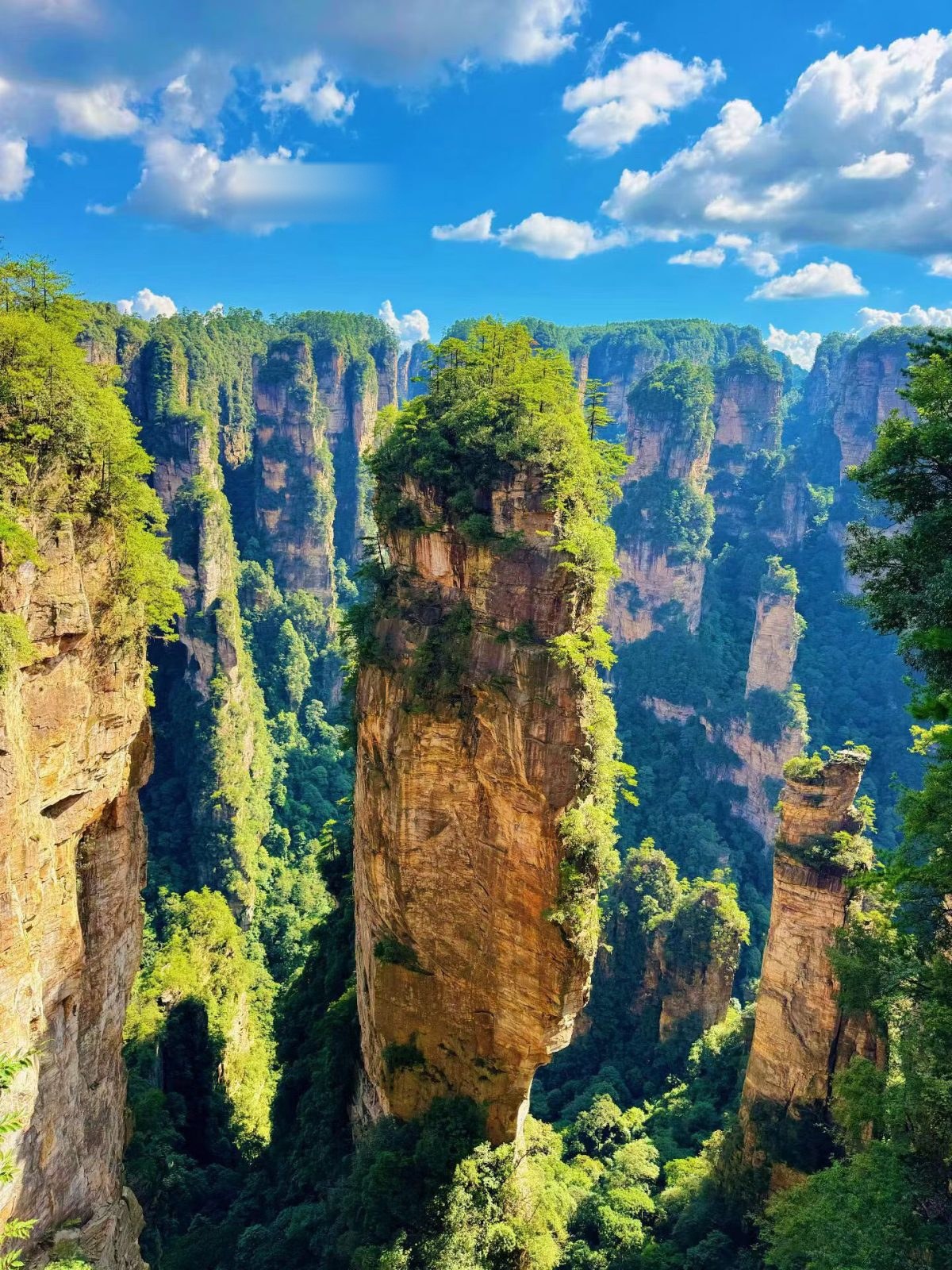
Short answer: Hunan is best known for three things: the sandstone pillars of Zhangjiajie, which look like the floating mountains in Avatar; Tianmen Mountain, with a natural arch through the rock and 999 steps leading up to it; and Hunan food, which is hot with fresh chilli. Hunan is a province in south-central China. Its capital is Changsha, and the name means “south of the lake”, after Dongting Lake. The mountains in the west are home to the Tujia and Miao peoples, and that is where you find Fenghuang Ancient Town and Furong, a town built on top of a waterfall.
Hunan at a glance
| Where | South-central China, south of the Yangtze River |
| What it is | A province. The capital is Changsha, and it is made up of 13 cities and one autonomous prefecture, Xiangxi. |
| Size | 211,800 square kilometres, a little smaller than the United Kingdom; 64.92 million residents at the end of 2025 |
| The name | “South of the lake”, after Dongting Lake. Its one-character short name is Xiang, after the Xiang River. |
| Best known for | The Zhangjiajie sandstone pillars, Tianmen Mountain and Hunan food |
| The way in | Changsha. The fastest direct high-speed train from Changsha to Zhangjiajie West takes 1 hour 45 minutes. |
| How long to stay | Three to five days for Zhangjiajie; with Fenghuang added, our routes run four days or seven. |
Eight things Hunan is famous for
1. The Zhangjiajie sandstone pillars, the “Avatar mountains”
More than 3,000 quartz-sandstone pillars stand in Zhangjiajie National Forest Park, many of them over 200 metres tall. It became China’s first national forest park in 1982, and the wider Wulingyuan area was listed as a UNESCO World Heritage Site in 1992. Avatar itself was shot on sound stages; its floating mountains drew on Chinese landscapes like this one, and in January 2010 one pillar here was officially renamed Avatar Hallelujah Mountain. Start with our Zhangjiajie National Forest Park guide, then where Avatar was filmed and the Yuanjiajie and Avatar Mountain guide.
2. Tianmen Mountain and the 999 steps
Tianmen Cave is a natural arch 131.5 metres high that goes right through the mountain; people call it Heaven’s Gate. The 999 steps up to it climb 218 metres, and an escalator runs beside them if you would rather not walk. The way up the mountain has been changing while the cableway is upgraded, so read our page on the Tianmen Mountain cable car before you go. The Tianmen Mountain guide and the 999 steps page have the rest.
3. The glass bridge and the cliff elevator
The Zhangjiajie Grand Canyon Glass Bridge is about 430 metres long and hangs roughly 300 metres above the canyon floor; it opened on 20 August 2016. Inside the Forest Park, the Bailong Elevator runs up the face of a sandstone cliff, and Guinness World Records lists it as the tallest outdoor elevator, at 326 metres. See the Zhangjiajie Glass Bridge guide and the Bailong Elevator page.
4. Fenghuang Ancient Town
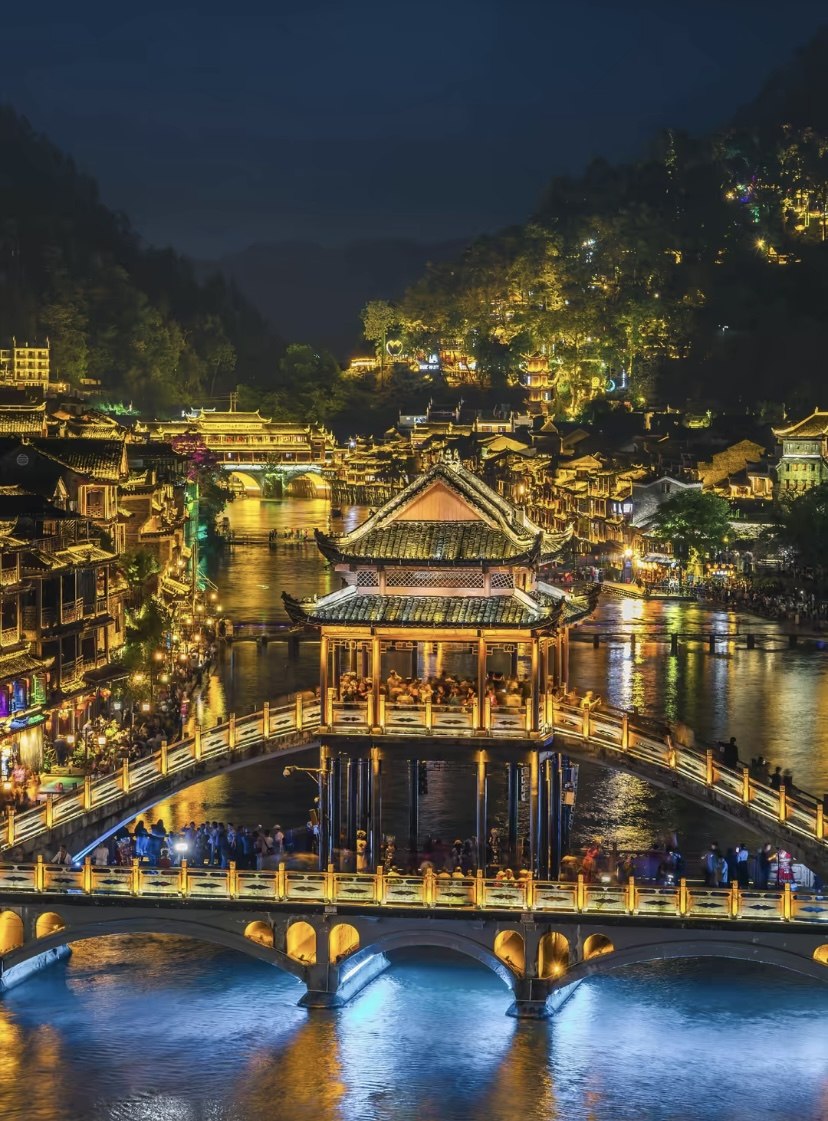
Fenghuang is a riverside old town in western Hunan, where wooden stilt houses line the Tuojiang River. More than half its people are Miao or Tujia, and it was the hometown of the writer Shen Congwen. It is at its best after dark, when the red lanterns on the stilt houses glow in the water, so stay a night. Our Fenghuang Ancient Town guide covers how to do it.
5. Furong, the town on a waterfall
Furong is a Tujia town about 2,000 years old, built on the cliff above a two-tier waterfall. The main street ends at the top of the fall, and a walkway takes you behind the curtain of water. It was called Wangcun until the 1986 film Hibiscus Town was shot here, and the name stuck. See the Furong Ancient Town guide or our Furong private day trip.
6. Hunan food
Hunan cuisine, also called Xiang cuisine, is one of the eight great regional cuisines of China. It is known for heat: fresh chillies and chopped pickled chillies, sour-and-hot flavours, and smoked pork. The heat is different from Sichuan’s, which adds the numbing Sichuan peppercorn. If you do not eat spicy food, say so when you book: on our tours the guide asks for mild or no chilli at every table. Our page on eating vegetarian and mild in Zhangjiajie explains how, and the Tujia home-cooking experience puts you in a local kitchen.
7. The Tujia and Miao peoples
Western Hunan, known as Xiangxi, is mountain country where the Tujia and Miao peoples live. The stilt houses, Miao embroidery and Tujia smoked pork all come from here. You can sit down with a Miao embroiderer in our Miao embroidery workshop in Fenghuang, or sleep a night in a Miao village on the Dehang Miao Village and Fenghuang 5-day tour.
8. Changsha, the capital
Changsha is Hunan’s capital and the way in for most international travellers. Changsha Huanghua Airport has far more flights than Zhangjiajie’s own airport, and for eligible nationalities it is one of China’s 240-hour visa-free transit ports, with all of Hunan inside the permitted area. Direct high-speed trains run from Changsha Railway Station to Zhangjiajie West, the fastest in 1 hour 45 minutes. See Changsha to Zhangjiajie, our 4-day Zhangjiajie and Fenghuang tour from Changsha, and the 240-hour visa-free transit guide.
Also remembered for: Yuelu Academy in Changsha, founded in 976 and one of the oldest academies in China; Xiang embroidery, the province’s silk embroidery tradition; and Dongting Lake in the north, the lake the province is named after.
Quick facts people ask
Where is Hunan?
Hunan is in south-central China, south of the Yangtze River. Hubei province lies to the north, across Dongting Lake. Changsha, the capital, is in the east of the province, and Zhangjiajie is in the north-west.
How big is Hunan, and how many people live there?
Hunan covers 211,800 square kilometres, a little smaller than the United Kingdom, and had 64.92 million residents at the end of 2025.
Are Hunan, Henan and Hainan the same place?
No. They are three different provinces. Hunan is in south-central China and has Zhangjiajie. Henan is further north, in central China, and has the Shaolin Temple. Hainan is the island in the far south.
Is Zhangjiajie in Hunan?
Yes, in the north-west of the province. From Changsha, the capital, the fastest direct high-speed train to Zhangjiajie West takes 1 hour 45 minutes. Our Changsha to Zhangjiajie page has the stations, trains and fares.
How is Hunan food different from Sichuan food?
Both are hot. Hunan cooking uses fresh chillies and chopped pickled chillies, and leans sour-and-hot. Sichuan cooking adds Sichuan peppercorn, which numbs the tongue as well.
See it with a local team
We are China Fantasy Travel, a locally licensed tour operator in Zhangjiajie (licence L-HUN-304201). A private day tour of Tianmen Mountain or Zhangjiajie National Forest Park is from US$220 per person for two travellers. Our 3-day Zhangjiajie tour with hotels and tickets is from US$500 per person, and the 4-day Zhangjiajie and Fenghuang tour from Changsha is from US$780 per person, with the trains, hotels, all tickets and the guide included. Every route is on the Zhangjiajie tours page, including the 7-day Zhangjiajie and Fenghuang private tour.
Frequently asked questions
What is Hunan famous for?
The sandstone pillars of Zhangjiajie, Tianmen Mountain and its 999 steps, Fenghuang Ancient Town, and Hunan food, which is hot with fresh chilli.
What is the most famous attraction in Hunan?
Zhangjiajie National Forest Park, with more than 3,000 sandstone pillars, followed by Tianmen Mountain. Our Zhangjiajie National Forest Park guide covers the park.
What is the most famous food in Hunan?
Hunan cuisine as a whole, known for fresh and pickled chillies and smoked pork. Steamed fish head with chopped chilli is the dish most people name, and in Changsha the street snack is stinky tofu.
Is Hunan worth visiting?
Yes, if you want landscapes you will not see anywhere else, with old river towns a few hours away. Our Is Zhangjiajie worth visiting? page goes through who it suits.
How many days do you need in Hunan?
Three to five days for Zhangjiajie. With Fenghuang Ancient Town added, our routes run four days or seven. See how many days in Zhangjiajie.
Where do international travellers enter Hunan?
Most come through Changsha, the capital, by air or by high-speed train, and go on to Zhangjiajie by train. Our how to get to Zhangjiajie page compares the routes.
Plan my trip | Zhangjiajie travel guide | How to get to Zhangjiajie | Company and licence verification